Mining and renewable energy operations share a problem the rest of industrial maintenance rarely faces: the asset is hours from the nearest cell tower. Open-pit mines stretch across thousands of acres of underground tunnels and remote pit faces. Solar farms span 1,000+ acres of desert. Wind farms sit on offshore platforms or in mountain valleys. Hydro plants are tucked deep in canyons. When connectivity drops — and it always does — a standard cloud CMMS becomes a paper notebook in disguise. Industry data shows 73% of maintenance data recorded on paper at remote sites never makes it into the CMMS, with field notes lost, transcription errors compounded, and asset histories full of gaps that lead to repeat failures and MSHA findings. The fix is not better connectivity. It is offline-capable maintenance software that lets technicians complete a full shift without a single bar of signal, then syncs the moment they return to coverage. Start a free trial to deploy an offline-first CMMS for your remote operations — or book a demo to see how Oxmaint's sync engine performs in a disconnected field environment.
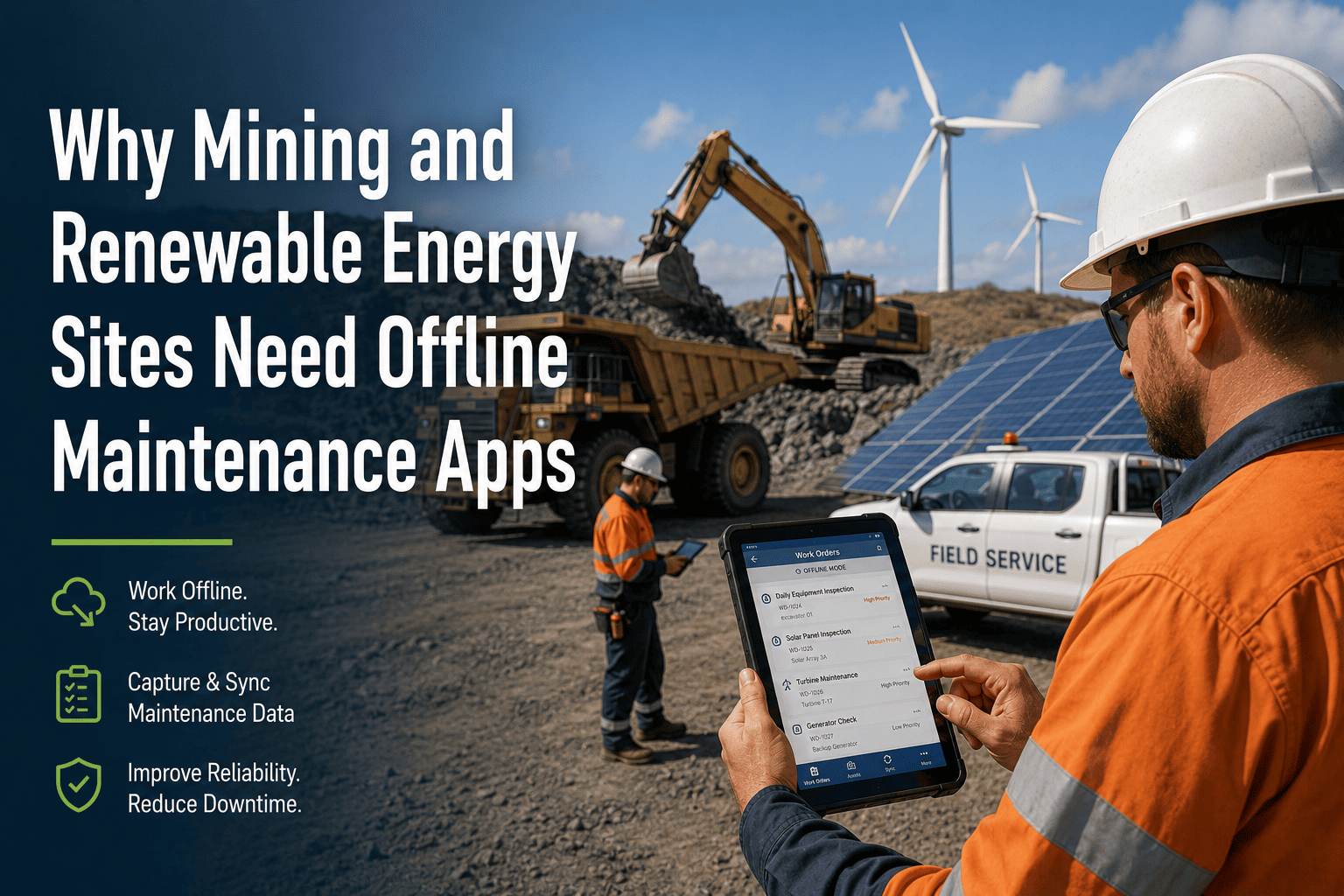
Why Mining and Renewable Energy Sites Need Offline Maintenance Apps
Remote operations need maintenance tools that work offline, sync later, and keep crews productive in the field. See how mining and renewable teams cut data loss, prove MSHA and SCADA-tied compliance, and stop the paper-to-CMMS gap.
What an Offline Maintenance App Actually Is
An offline maintenance app is a mobile-first CMMS that stores a complete local copy of work orders, asset records, inspection checklists, manuals, and PM schedules on the technician's device. Every action — opening a work order, logging a fault, completing an inspection, capturing a photo, scanning a QR code — is timestamped and queued locally. The moment the device returns to network coverage, the queue flushes to the cloud automatically. Nothing is lost, nothing is duplicated, every record carries the original field timestamp rather than the sync time.
This matters because mining and renewable energy sites are structurally different from indoor manufacturing. A haul truck operator climbing into a pit at 4am has no signal. A wind turbine technician inside the nacelle of an offshore platform has no signal. A solar O&M crew driving 90 minutes between inverter arrays has no signal. Without offline capability the entire workflow defaults to paper, and paper defaults to data loss. Sites that move to offline-first CMMS see a 50% reduction in data entry delays and full closure of the paper-to-system gap — start a free trial to see how it works on your fleet.
Six Capabilities a Remote-Site CMMS Must Have
Not every CMMS marketed as "mobile" is genuinely offline-capable. Six capabilities separate true field-ready software from cloud apps that simply degrade when connectivity drops. Each one becomes a hard requirement the first time a technician tries to close a work order from underground or from inside a turbine nacelle.
Where Remote Sites Lose Maintenance Data — Six Failure Modes
Mining and renewable energy operations consistently lose maintenance data in the same six places. Each one looks small in isolation but compounds across a fleet over a quarter. Teams that close even two or three of these gaps recover hours of audit time and catch failure patterns weeks earlier — start a free trial to see your own gap profile.
How Oxmaint Handles the Offline-First Workflow
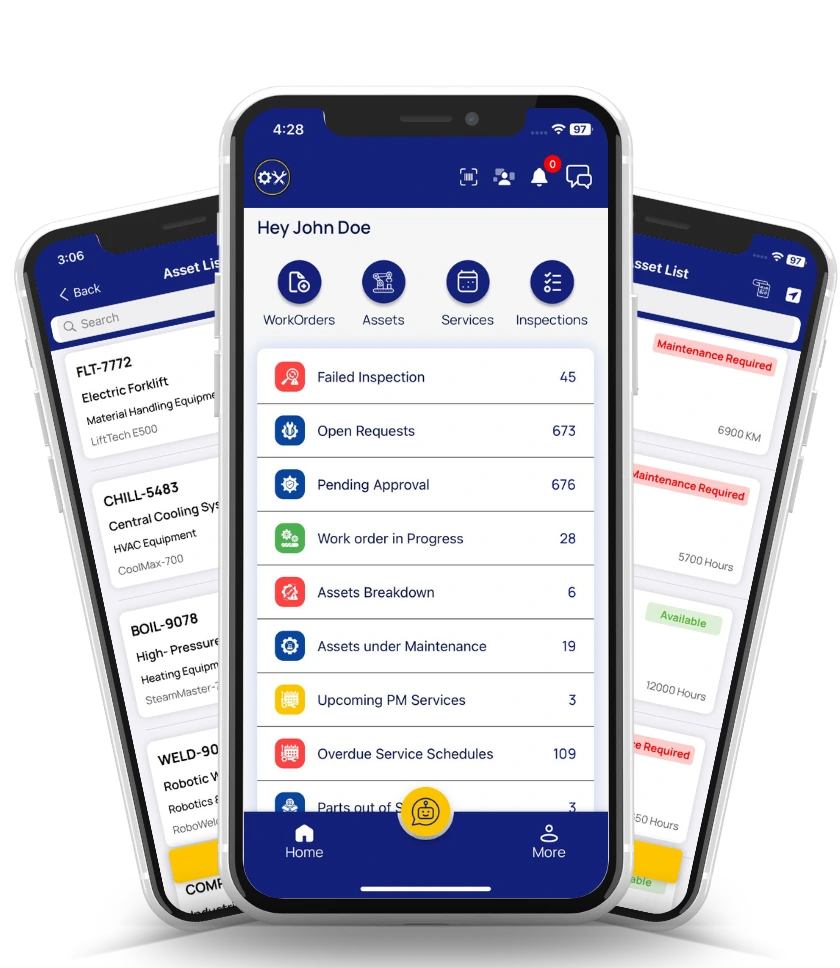
Oxmaint's mobile app is designed offline-first rather than offline-tolerant. The local database is full, not partial. Every action queues with its original field timestamp. SCADA alarms, telematics engine hours, and inspection checklists merge into a single work order view that loads instantly with or without signal. When the device returns to coverage, the queue flushes silently — no manual sync, no duplicate records, no lost photos. Start a free trial to see the offline workflow on your own asset structure.
Paper / Online-Only vs Offline-First — Side by Side
The operational gap between conventional remote-site maintenance and offline-first CMMS shows up most clearly in the moments that matter — when a fault is logged underground, when a wind-turbine inspection happens in a nacelle, when a solar PM check happens 90 minutes from the depot. The comparison below is built from operator data across mining, solar, wind, and hydro sites.
| Workflow Dimension | Paper / Online-Only | Offline-First CMMS |
|---|---|---|
| Data capture method | Paper, then re-keyed | Direct mobile entry, queued locally |
| Timestamp integrity | Sync time only — field time lost | Original field timestamp preserved |
| Photo evidence | Personal phone, often never uploaded | Captured in-app, auto-uploaded |
| SCADA / telematics | Siloed, separate dashboards | Integrated into work orders |
| Audit readiness | Days of binder search | Filtered export in seconds |
| Data loss rate | ~73% of paper entries lost | Near zero with auto-sync |
| Asset history completeness | Gaps across every shift change | Continuous record per asset |
ROI After Moving to Offline-First Maintenance
The numbers below come from mining and renewable operations that completed a 6–12 month transition from paper/online-only to offline-first CMMS. The pattern is consistent across haul fleets, solar arrays, wind farms, and hydro stations — and the payback is typically the first avoided catastrophic failure caught by a now-complete PM history.
Frequently Asked Questions
How does the offline sync engine prevent duplicate or conflicting records
Does Oxmaint integrate with our SCADA, telematics, and inverter monitoring systems
How fast can we roll this out across a multi-site mining or renewable portfolio
Will the audit trail satisfy MSHA, OSHA, and grid-operator compliance inspectors
Stop Losing Field Data at the Edge of Coverage
Give every remote technician a full CMMS in their pocket — online or off — and let the sync engine handle the rest.