Railway track inspectors and construction site crews share an operational reality that office-based maintenance teams never face the work happens hundreds of miles from a desktop computer, on routes where cellular coverage fails, inside tunnels where signals do not penetrate, and on overnight possession windows when the closest dispatcher is asleep. When a track inspector finds a 0.3mm rail base fissure at 2 AM on a freezing January morning, the question is not whether the defect will become a $22 million derailment event it is whether the inspector's handwritten note ever becomes a work order. In one documented 2025 Class 1 freight incident, a switch heater defect noted on paper seven months earlier was never converted to a work order, costing $3.7 million in cascading service penalties. Mobile work orders close that gap permanently to see how Oxmaint converts every field finding into structured maintenance action, start a free trial or book a demo.
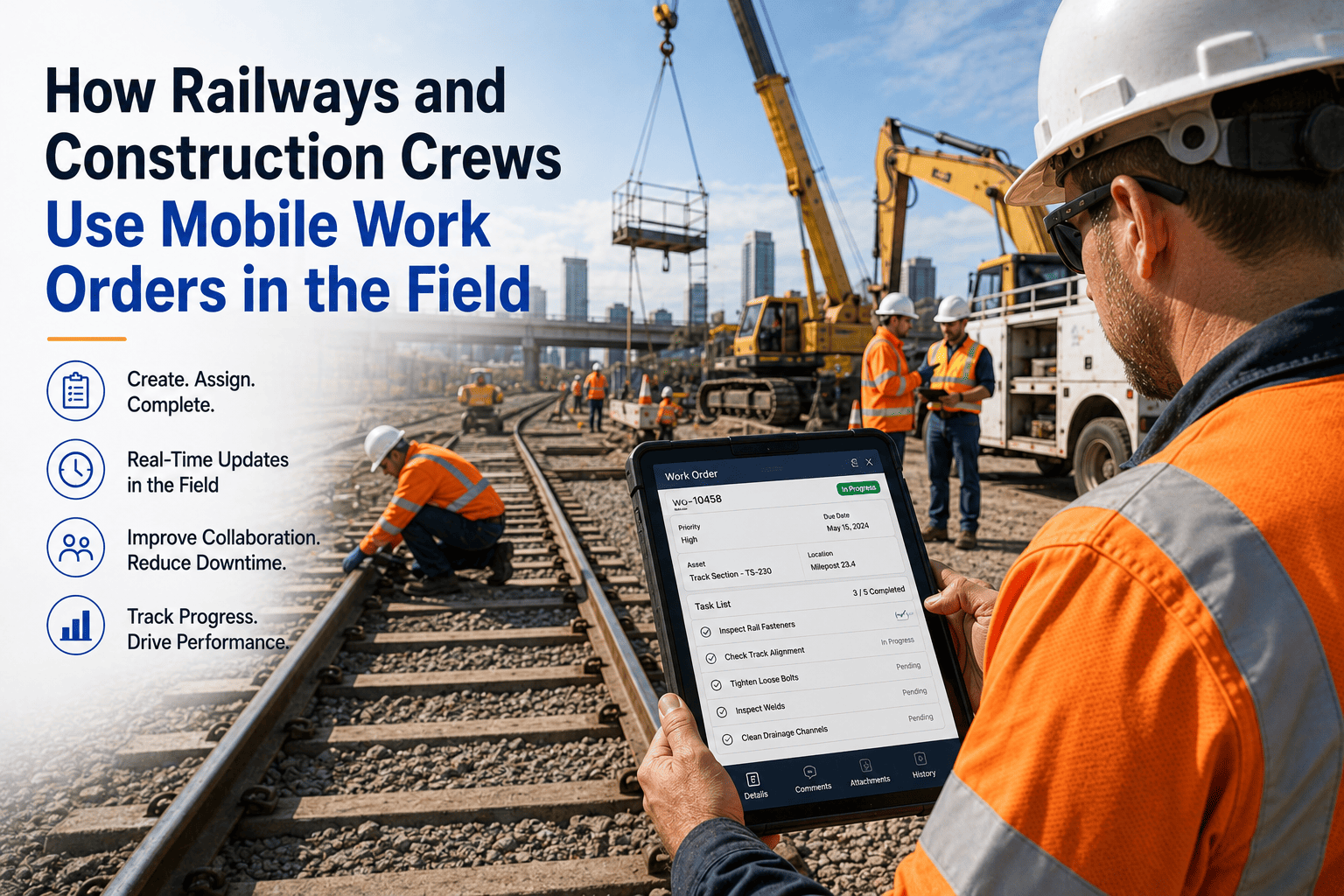
How Railways and Construction Crews Use Mobile Work Orders in the Field
From mainline track inspections at -10C to construction site equipment checks across hundreds of miles, field crews need work order systems that travel with them. This guide shows how Oxmaint replaces paper forms and dispatcher phone calls with mobile-first field workflows.
What Are Mobile Work Orders for Railway and Construction Field Crews?
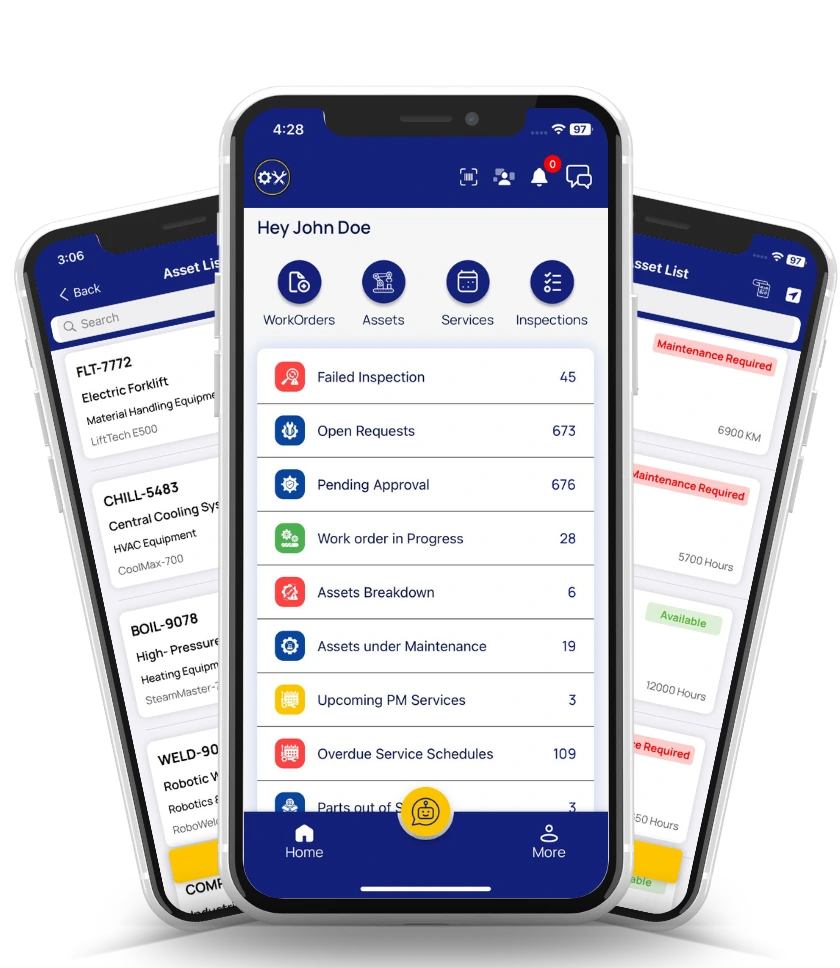
Mobile work orders are smartphone and tablet-based maintenance instructions that travel with field crews to the point of work whether that is a remote section of track, a construction job site three states away, or a switch yard on overnight possession. Instead of returning to an office to log defects, retrieve asset history, or close completed jobs, the technician carries all of it in their pocket. Work orders include exact GPS location, defect details, photo evidence, parts requirements, and digital checklists for every inspection class.
For railway operations, mobile work orders convert FRA Part 213 track inspections into auditable digital records with speed restriction tracking, repair verification, and Form 6180 documentation. For construction, they replace paper job tickets with real-time updates that supervisors and project managers can see from the office. The structural difference is that nothing gets lost between inspection and repair every defect becomes a tracked work item with an owner, a due date, and a closure record. To explore how Oxmaint structures mobile workflows for distributed crews, start a free trial or book a demo.
The Six Capabilities That Make Mobile Work Orders Work for Field Crews
Most CMMS vendors advertise a mobile app, but field-ready capability is not the same as a responsive web view. These are the six capabilities that determine whether a mobile work order system survives contact with a real railway corridor or a real construction site.
71% of FRA-reportable track defects were identified before they failed but never converted into completed work orders. Mobile work orders close that gap.
Why Paper and Spreadsheet Work Orders Fail Railway and Construction Crews
An estimated 82 percent of railway maintenance organizations still run paper-based or spreadsheet work order systems disconnected from inspection data. Construction operations are not much better, with most multi-site contractors still passing job tickets via clipboard, text message, and the occasional photo emailed back to the project manager. The cost of this disconnection shows up in failed audits, missed PMs, and incidents that should have been preventable. Start a free trial to test mobile workflows on your operation, or book a demo for a guided walkthrough.
How Oxmaint Mobile CMMS Replaces Paper Work Orders for Field Crews
Oxmaint's mobile-first architecture is built for technicians, track inspectors, and construction crews who work where the signal disappears. Defects logged in the field become work orders within seconds, with GPS, photos, severity, and material requirements pre-attached. Supervisors see crew status, completion rates, and compliance evidence in real time from any device. Ready to deploy mobile workflows? Start a free trial today or book a demo with our field operations team.
Paper Work Orders vs Mobile Work Orders with Oxmaint
The shift from paper or spreadsheet work orders to a mobile-first system is not a productivity tweak it is a structural change in how field findings become completed repairs. Here is the side-by-side picture from real railway and construction deployments.
| Operational Factor | Paper / Spreadsheet | Oxmaint Mobile Work Orders |
|---|---|---|
| Defect-to-work-order conversion | 40 to 55 percent | Above 95 percent |
| Daily technician paperwork burden | 3 to 5 hours per shift | Under 30 minutes |
| Visual evidence on defect records | 12 percent capture rate | 78 percent capture rate |
| GPS-anchored defect location | Verbal mile markers | Auto-stamped coordinates |
| Audit documentation prep time | 2 to 4 weeks manual | Under 2 hours export |
| Dispatcher phone calls per shift | 15 to 25 per crew | Near zero |
| Defect-to-repair response time | Industry baseline | 35 to 50 percent faster |
| Cross-territory trend visibility | Impossible | Portfolio dashboards |
What Mobile Work Orders Deliver for Railway and Construction Operations
Railway and construction operators switching to Oxmaint mobile work orders see consistent results within the first 90 days start a free trial to experience this shift on your own crews, or book a demo to see how it applies to your specific routes and job sites.
Mobile Work Orders for Field Crews Common Questions
Does Oxmaint mobile work in zero-connectivity zones like tunnels, canyons, and remote track sections?
Can Oxmaint generate FRA-compliant documentation including Form 6180 records?
How fast can a railway operator or construction company deploy Oxmaint across distributed crews?
Can the same platform handle both railway track maintenance and construction equipment workflows?
Stop Losing Field Defects Between Inspection and Repair
Whether your crews maintain mainline track, hundreds of miles of construction corridor, or distributed equipment across multiple job sites Oxmaint puts every work order, asset history, photo, and compliance form in the technician's pocket. No heavy implementation. Works offline. Live in days, not months.
- Real-time crew and asset visibility across every territory
- Predictive alerts and severity-based escalation
- 5 to 10 year CapEx forecasting at portfolio level
Used by field operations teams managing 10,000+ distributed assets. Limited onboarding slots this quarter.