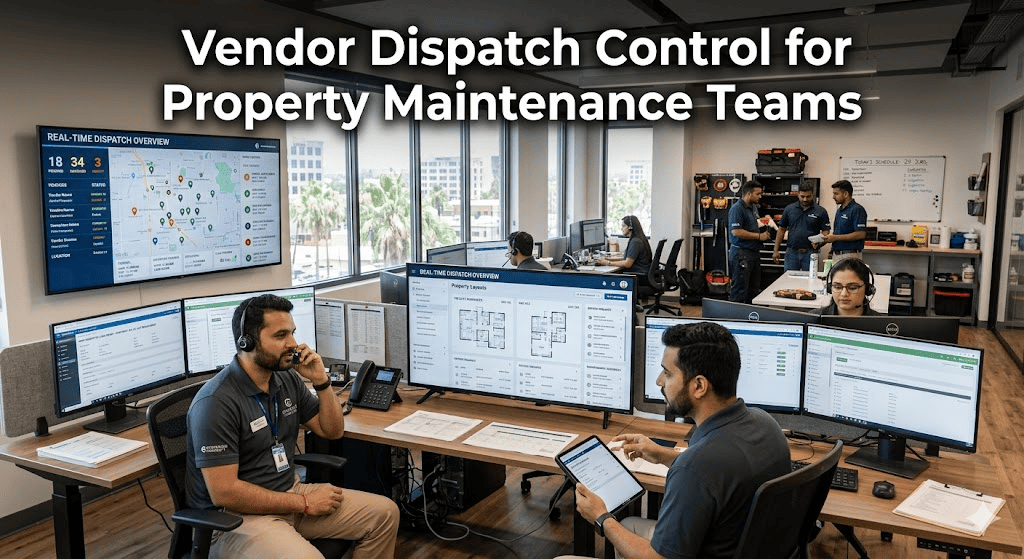
Property maintenance teams lose more time coordinating vendor dispatch than they spend on actual repairs. Phone tag with contractors, unclear work scopes, missed arrival windows, and invoices that don't match the work order are the daily operational tax on every property manager running a multi-unit or multi-property portfolio without a structured dispatch system. When a boiler fails in a 200-unit residential complex at 11pm or a commercial tenant reports a critical HVAC fault on a Friday afternoon, the quality of your vendor dispatch process determines whether that incident costs $800 or $8,000. OxMaint's vendor dispatch control module gives property operations teams asset-based scheduling, priority-ranked work order queues, and real-time repair tracking — converting reactive coordination chaos into a structured, accountable workflow.
Get Your Custom Vendor Dispatch Workflow — 30-Minute Session
See how much time and cost you can recover from unstructured vendor coordination across your property portfolio.
Works across multi-site portfolios · No heavy implementation required · Live in days
What Is Vendor Dispatch Control for Property Maintenance?
Vendor dispatch control is the structured process of selecting, scheduling, briefing, tracking, and verifying external contractors and service providers who perform repair and maintenance work across a property portfolio. Done well, it means every vendor arrives with a scoped work order, has access to the asset history they need, completes work to a documented standard, and submits invoices that match pre-approved rates and scopes.
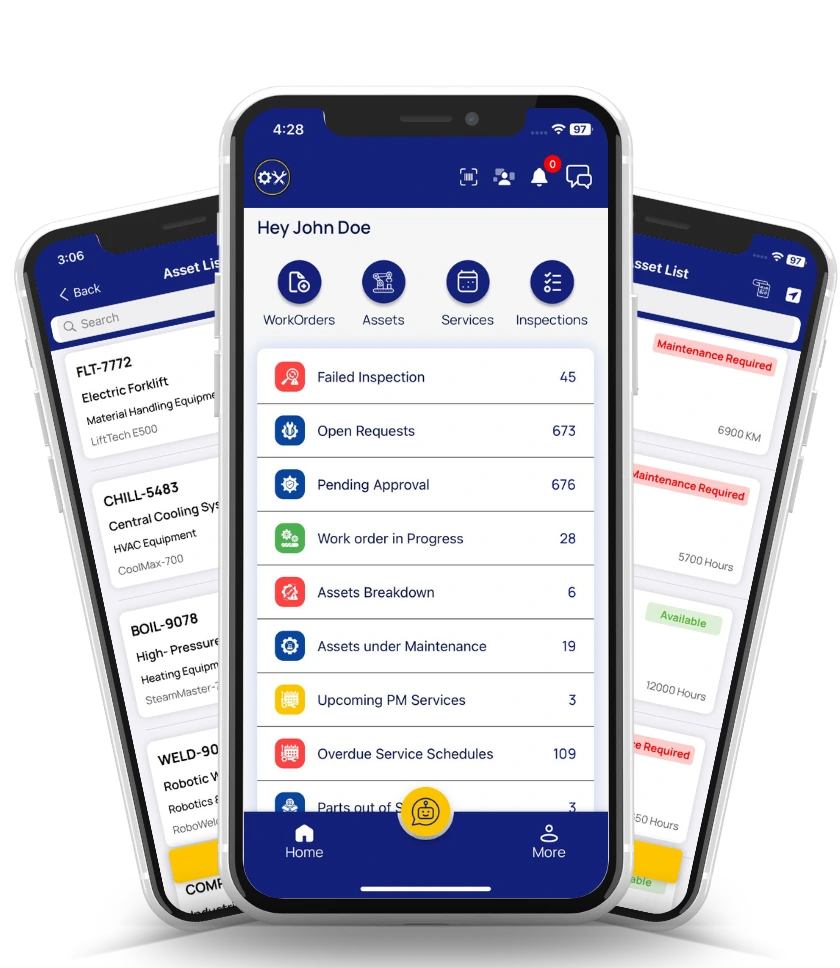
Done poorly — which is the default state for most property teams operating on phone calls, email threads, and disconnected spreadsheets — vendor dispatch is a source of repeated cost overruns, SLA breaches, and tenant escalations. OxMaint converts dispatch from a coordination overhead into a controlled, trackable workflow anchored to asset records and priority-ranked work order queues. Start a free trial to see how the dispatch module maps to your vendor roster, or book a demo and we will walk through your current dispatch workflow live.
8 Core Components of Effective Vendor Dispatch Control
Work orders are generated from asset condition data — not from tenant complaints alone. Dispatch is tied to the specific asset, its service history, and its current condition score.
All open work orders are ranked by criticality, asset risk tier, and SLA deadline — ensuring vendors are dispatched to the highest-impact tasks first, not the most recently reported ones.
Maintain a rated vendor database with trade specialisms, contract rates, insurance expiry, and performance scores. Match vendors to work orders by trade, location, and availability automatically.
Vendors receive a structured work order with full asset history, access instructions, safety requirements, and approved rate — eliminating the scope ambiguity that drives invoice disputes.
Property managers see vendor arrival time, work-in-progress status, and job completion in real time — without calling the vendor. Delays and missed windows trigger automatic alerts to dispatch coordinators.
Vendors submit before-and-after photos as part of work order closure. All evidence is stored against the asset record — creating an unambiguous repair history for warranty claims and future diagnoses.
Every work order has an SLA clock. Approaching or breached SLAs trigger automatic escalation to the property manager and operations director — before a tenant complaint is raised.
Vendor invoices are matched against the approved work order rate and scope before payment approval. Discrepancies are flagged automatically — reducing disputed invoices by up to 70%.
6 Dispatch Pain Points Draining Property Operations Budgets
Without a structured system, poor vendor performance — missed arrival windows, incomplete repairs, repeated callbacks — goes undocumented and unremediated. Property teams continue using underperforming contractors because they have no data to justify switching.
Property teams operating without PM scheduling dispatch the majority of their vendor calls reactively — at emergency or after-hours rates that run 2-4x the standard rate. A single avoidable after-hours HVAC call can cost $1,500-$3,500 more than a scheduled PM visit.
Uncoordinated vendor scheduling — especially in occupied residential or commercial properties — results in access conflicts, unannounced entries, and incomplete repairs requiring repeat visits. Tenant satisfaction scores and lease renewal rates both decline in direct proportion to maintenance coordination failures.
When work orders are issued verbally or via email without scoped rate agreements, invoice disputes are inevitable. Processing disputed invoices consumes an average of 3-6 hours per dispute across the property management team — time that costs more than the invoice difference in most cases.
Dispatching vendors whose insurance has lapsed or whose trade licenses are expired creates direct liability exposure for the property owner and manager. Without a centralised vendor compliance register with expiry alerts, these gaps are discovered only when an incident occurs — at which point they become insurance and legal issues.
Property operations directors managing 10+ properties cannot see vendor spend concentration, repeat failure assets, or buildings trending above budget without pulling data from multiple systems. This blind spot routinely produces budget overruns that are only identified during quarterly financial reviews — 90 days too late to act.
Teams that implement structured vendor dispatch through OxMaint consistently reduce vendor coordination overhead by 50% and recover 25-40% of reactive maintenance spend — start a free trial to see the dispatch module live on your work order data.
How OxMaint Transforms Vendor Dispatch for Property Teams
All contractors stored with trade type, contract rate card, insurance expiry, license status, and performance rating. Auto-alerts fire 60 days before any vendor compliance document lapses — preventing liability exposure.
Work orders are ranked by asset criticality, tenant impact, and SLA deadline. The system recommends the best available vendor for each job based on trade match, proximity, and current load — reducing coordinator decision time from 20 minutes to under 2.
Every dispatched job includes full asset history, approved scope, rate ceiling, access instructions, and safety requirements. Vendors sign digital acknowledgment before attending — creating scope accountability from the first click.
Property managers see vendor check-in, work-in-progress updates, and job closure in real time from any device. Missed arrival windows and SLA breaches trigger instant alerts — eliminating the need for chasing calls entirely.
Unstructured Dispatch vs. OxMaint Vendor Control: Head-to-Head
| Dispatch Area | Unstructured / Phone-Based | OxMaint Vendor Dispatch Control |
|---|---|---|
| Work Order Issuance | Phone call or email, no formal scope | Digital WO with scope, rate, and asset history |
| Vendor Selection | Memory-based, whoever answers first | Matched by trade, rating, availability, and rate |
| Job Tracking | Manual follow-up calls, unknown ETA | Real-time status updates from vendor's device |
| Invoice Verification | Manual rate check, 35% dispute rate | Auto-matched to approved scope, flagged on deviation |
| Performance Data | None — no historical vendor scoring | SLA, callback rate, cost vs. estimate tracked per vendor |
| Insurance Compliance | Manual check, lapses undetected | Auto-alerts at 60 and 30 days before expiry |
Property teams switching to OxMaint's structured dispatch workflow see measurable vendor spend reduction within 60 days — start a free trial to connect your vendor roster today, or book a demo and we will map your current dispatch workflow against the OxMaint model live.
Frequently Asked Questions
Can OxMaint manage multiple vendors across different property types in one system?
How does OxMaint handle emergency after-hours vendor dispatch?
Does OxMaint track vendor insurance and trade license expiry?
How does structured vendor dispatch reduce property maintenance costs?
Stop Overpaying on Uncontrolled Vendor Spend
Turn Every Vendor Dispatch Into a Controlled, Trackable, Accountable Workflow
OxMaint connects your asset register, work order system, and vendor roster into one dispatch platform — so every repair is scoped, tracked, and verified from first alert to final invoice.
- Real-time vendor tracking across your entire property portfolio
- Automated SLA alerts before tenant escalations occur
- 5-10 year CapEx forecasting from asset repair history
Used by property operations teams managing 10,000+ assets · See results in the first 30 days