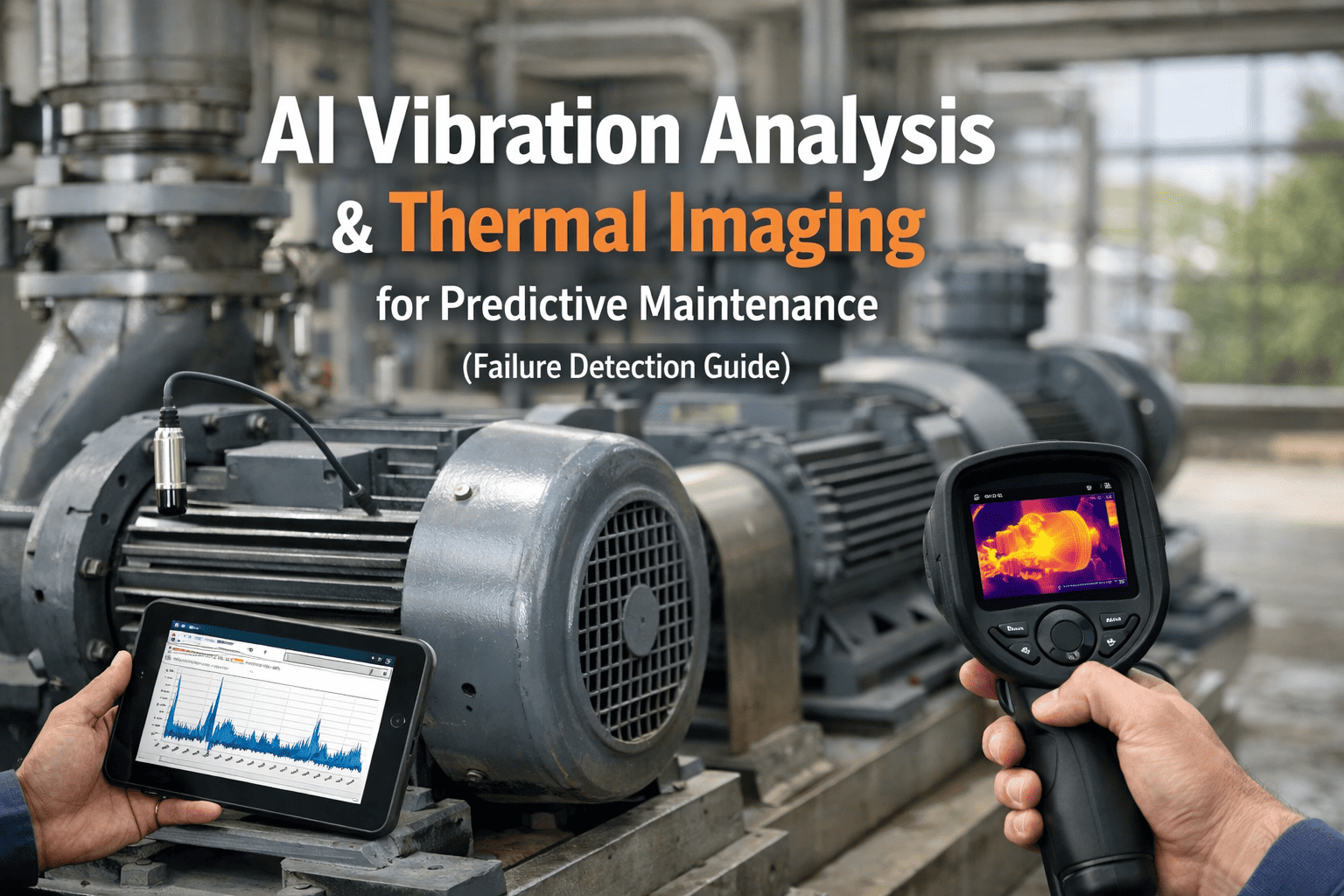
A paper mill maintenance manager hears a faint whine from a drying press during a walkthrough. It sounds slightly different from last week but not alarming. He makes a mental note. Three weeks later, the bearing seizes. The press is down for 36 hours. Emergency parts are air-freighted. The repair costs $47,000. Production loss adds another $120,000. A wireless vibration sensor on the same bearing would have detected the fault signature — a specific ball-pass frequency harmonic — 11 weeks before failure. An AI system would have flagged the degradation trend, estimated remaining useful life, and auto-generated a work order inside the CMMS. The bearing replacement during planned downtime: $800 in parts, 2 hours of labour, zero production loss. This is the difference between listening to machines with human ears and monitoring them with AI-powered vibration analysis and thermal imaging. Vibration analysis represents 39.7% of all predictive maintenance implementations — the single most widely used technique in manufacturing. Combined with thermal imaging for electrical and thermal faults, these two technologies form the foundation of modern condition-based monitoring. Book a demo to see how Oxmaint integrates vibration and thermal alerts into automated maintenance workflows — from $8 per user per month.
UPCOMING OXMAINT EVENT
AI-Powered Predictive Maintenance: Eliminate Unplanned Downtime in Manufacturing
See how vibration analysis and thermal imaging data flows directly into Oxmaint — generating work orders, trending asset health, and eliminating the gap between detection and repair.
Of all predictive maintenance implementations use vibration analysis — the most widely deployed condition monitoring technique globally
30–90 Days
Advance warning AI provides before equipment failure — from early anomaly detection to functional breakdown
80–97%
Prediction accuracy of modern AI models trained on vibration and thermal data from industrial equipment
40%
Reduction in unscheduled equipment removals reported by GE Aviation using vibration and acoustic AI analysis on jet engines
TWO SENSES, ONE GOAL
Vibration Analysis vs Thermal Imaging: What Each Detects and When to Use Both
Vibration analysis and thermal imaging are complementary, not competing, technologies. Vibration excels at detecting mechanical faults in rotating equipment — bearings, gears, shafts, couplings. Thermal imaging excels at detecting electrical faults, insulation failures, and heat-related degradation. Together they cover over 80% of all industrial equipment failure modes.
Vibration Analysis
Detects mechanical faults in rotating equipment
Bearing wear — ball-pass frequency harmonics appear weeks before audible noise
Looseness — sub-harmonic frequencies and broadband noise
Cavitation — high-frequency random vibration in pumps
Best for: Motors, pumps, fans, compressors, gearboxes, turbines
Thermal Imaging
Detects electrical and thermal faults across all equipment
Electrical hotspots — loose connections, overloaded circuits before arcing
Insulation breakdown — thermal patterns revealing degraded motor windings
Bearing overheating — confirms vibration alerts with thermal evidence
Steam/fluid leaks — temperature differentials around valves and joints
Refractory damage — heat escape patterns in furnaces and kilns
HVAC inefficiency — blocked coils, failing compressors, air leaks
Best for: Switchgear, transformers, panels, steam systems, furnaces
THE P-F INTERVAL
The P-F Curve: Where Vibration and Thermal Imaging Catch Failures That Human Senses Miss
The P-F Curve shows the timeline from when a failure first becomes detectable (P — Potential failure) to when the equipment actually breaks (F — Functional failure). AI-powered vibration and thermal analysis detect faults months before human senses can notice anything wrong. The earlier you detect, the cheaper the repair and the less downtime you suffer.
6–12 Months Before Failure
AI Vibration Analysis
Sub-surface bearing defects, microscopic misalignment, early gear wear — detectable only through frequency spectrum analysis
Repair cost: $200–$1,000
2–6 Months Before Failure
AI Thermal Imaging
Elevated temperatures from friction, electrical resistance, insulation degradation — visible in infrared but not to the eye
Repair cost: $1,000–$5,000
Days to Weeks Before Failure
Human Senses (Noise, Heat, Smell)
Audible grinding, visible smoke, burning smell, touch-detectable heat — by this point, damage has already occurred
Repair cost: $5,000–$50,000+
Failure
Unplanned Breakdown
Equipment stops. Production halts. Emergency callout. Rush-shipped parts. Collateral damage to connected systems.
Total cost: $20,000–$200,000+
FROM SIGNAL TO ACTION
How Oxmaint Turns Sensor Data Into Completed Repairs
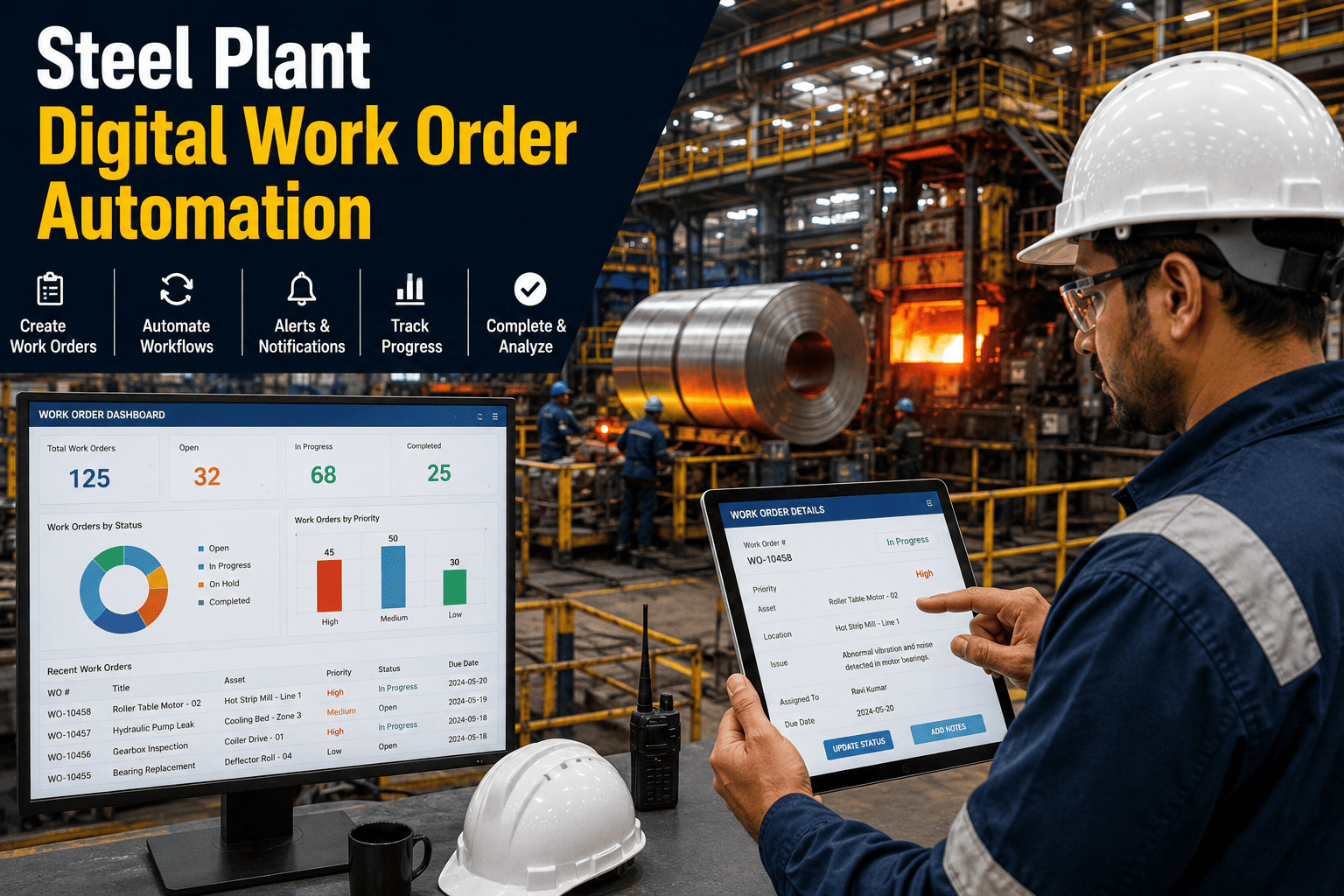
The biggest failure in condition monitoring is not detection — it is execution. Most facilities that buy vibration sensors leave the data sitting in a dashboard that only the reliability engineer checks. Oxmaint closes this gap by converting every actionable alert into a tracked, assigned, scheduled work order.
01
Sensor Detects Anomaly
Wireless vibration sensor or thermal camera flags abnormal reading on a monitored asset.
02
AI Classifies the Fault
Algorithm identifies fault type (bearing, misalignment, electrical) and estimates severity and remaining life.
03
Oxmaint Creates Work Order
Alert pushes via API to Oxmaint — auto-generating a prioritised work order with asset history and spectral data attached.
04
Technician Executes Repair
Bearing replaced during planned downtime. 2 hours labour, $800 parts. Zero production loss. Closed with photo evidence in Oxmaint.
Both detect simultaneously — strongest combined signal
Steam / Fluid Leak
—
Primary
Temperature differentials reveal leaks instantly
Structural Looseness
Primary
—
Sub-harmonic frequencies and broadband noise
COMMON QUESTIONS
AI Vibration & Thermal Monitoring: What Teams Ask
Do we need both vibration and thermal monitoring, or can we start with one?
Start with vibration on your most critical rotating equipment — motors, pumps, fans, compressors. This covers the largest single category of industrial failures. Add thermal imaging for electrical panels, switchgear, and steam systems. Most facilities see the fastest ROI by deploying vibration first and adding thermal within 6 months. Oxmaint integrates both into a single work order workflow. Start your free trial today.
How does Oxmaint receive vibration and thermal data?
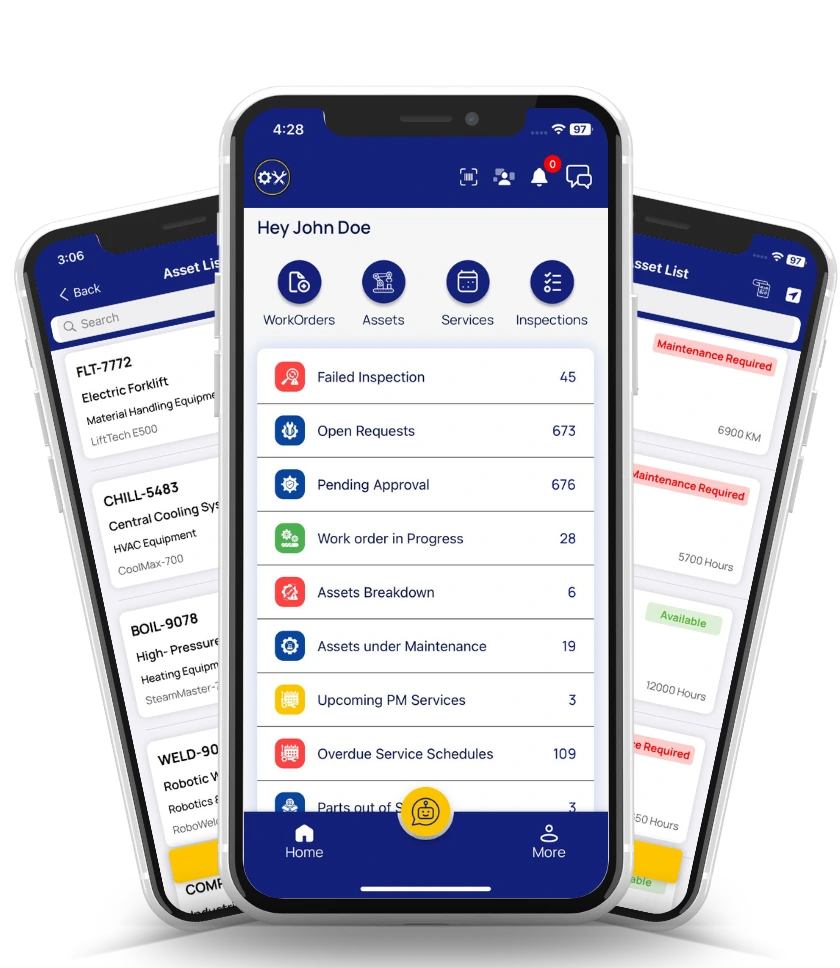
Oxmaint connects to vibration platforms and thermal imaging systems via API. When a sensor platform flags an anomaly that exceeds configured severity thresholds, it pushes an alert to Oxmaint. Oxmaint auto-creates a work order — attaching the spectral data, fault classification, asset history, and recommended action. Your technician sees it on their phone before the next shift starts. Book a demo to see the integration live.
What ROI can we expect from AI vibration monitoring?
Industry benchmarks show predictive maintenance reduces maintenance costs by 25%, increases uptime by 10–20%, and delivers 10:1 to 30:1 ROI within 12–18 months. GE Aviation reported 40% fewer unscheduled removals. Siemens achieved 30% maintenance cost reduction and 50% downtime decrease. Most facilities recover the full sensor investment within the first prevented emergency event.
Your Equipment Is Already Telling You What Will Fail Next. Start Listening With AI. Start Acting With Oxmaint.
Oxmaint starts at $8 per user per month with AI-powered work orders, predictive scheduling, full asset intelligence, and mobile-first execution. Connect any sensor platform. Deploy in days.